Cat A vs Cat B fit out: what the terms mean
Cat A is what the landlord does to make a floor lettable. Cat B is what the tenant does to make it an office. Almost every conversation with a London fit out company uses these two terms in the first five minutes, and the budget, the programme and the choice of contractor all depend on which one you are talking about.
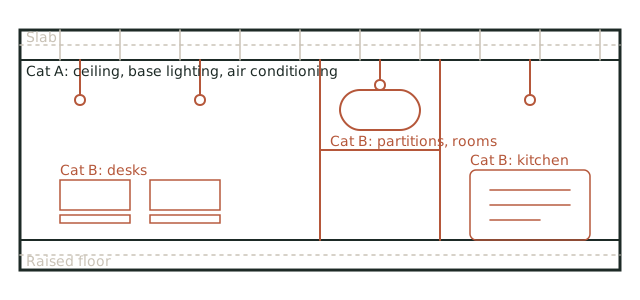
What goes where
| Item | Category | Who pays |
|---|---|---|
| Raised access floor | Cat A | Landlord |
| Suspended ceiling and basic lighting | Cat A | Landlord |
| Air conditioning to an open plan standard | Cat A | Landlord |
| Fire detection and sprinklers to base spec | Cat A | Landlord |
| Partitions, doors and glazing | Cat B | Tenant |
| Meeting rooms, phone booths, kitchens | Cat B | Tenant |
| Floor finishes, feature ceilings, decoration | Cat B | Tenant |
| Small power, data, AV, access control | Cat B | Tenant |
| Furniture and branding | Cat B | Tenant |
| M&E changes to suit cellular layout | Cat B | Tenant |
Cat A in more detail
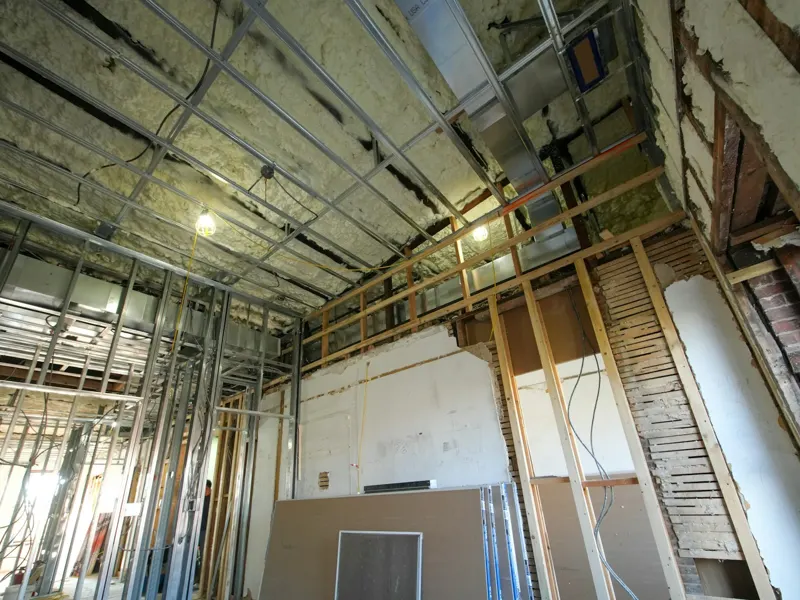
A Cat A floor has everything a building needs and nothing a business needs. Walk onto one and you will see a raised floor with carpet tiles or bare tiles, a grid ceiling with lighting laid out for open plan, air conditioning balanced for an even load, fire detection, perhaps blinds. There are no walls, no kitchen, no data. Landlords deliver Cat A because it lets any tenant start from the same place, and its cost, typically £100 to £150 per square foot in London, is recovered through rent rather than charged to the tenant.
Cat B in more detail
Cat B is the tenant's project and the one this directory is mostly about. It covers the layout (partitions, meeting rooms, breakout, kitchens), the finishes (floors, feature ceilings, decoration, joinery), the services that the layout needs (small power, data, lighting design, AV, access control, and any changes to air conditioning so cellular rooms are comfortable), and the things that make the space yours (furniture, branding, planting). Costs run £50 to £150 per square foot for standard to good specification and more for premium. At lease end the tenant is usually obliged to strip Cat B out and return the floor to Cat A, which is the dilapidations liability that catches occupiers out.
Cat A+ and the plug and play floor
Cat A+ is a landlord's answer to tenants who do not want a project. The landlord installs a generic Cat B, usually open plan desks, a couple of meeting rooms and a tea point, and lets the floor ready to occupy. It suits smaller floors, shorter leases and companies who value speed over identity. It is not the same as a serviced office; you still hold a lease and the space is still yours to alter within the licence.
Which contractors do which
Enterprise contractors in the directory tend to lead with Cat A programmes for landlords and large Cat B schemes for corporates. Mid market and boutique firms live almost entirely in Cat B and refurbishment for occupiers. When you are briefing a contractor, say which category you mean and whether the floor is currently shell and core, Cat A, Cat A+ or a previous tenant's Cat B, because each starting point changes the scope.
Common questions
What is a Cat A fit out?+
The landlord's base build of a floor to a lettable standard: raised floors, suspended ceilings, basic mechanical and electrical, fire detection, blinds and sometimes finished WCs and lobbies. It is a blank canvas, not an office.
What is a Cat B fit out?+
The tenant's fit out of a Cat A space into a working office: partitions, meeting rooms, kitchens, finishes, lighting design, furniture, IT and AV, branding. It is what most people mean by an office fit out.
What is Cat A+?+
A landlord fitted floor with a generic Cat B installed, usually open plan desking, a meeting room or two and a tea point, so a tenant can move in with minimal work. Common on smaller floors and in buildings targeting fast lettings.
Who pays for Cat A and Cat B?+
The landlord pays for Cat A and recovers it through rent. The tenant pays for Cat B, though landlords often contribute through rent free periods or a capital sum, and the tenant is usually obliged to strip Cat B out at lease end.
What is a shell and core?+
The stage before Cat A: the structure, envelope, lifts, core services and common parts, with floors left bare. Landlords sometimes let shell and core to tenants who want to control the whole fit out.
Find a firm for it
Office Refurbishment Contractors
Firms that deliver refurbishment work on site, grouped by the project sizes they take on.
Browse 0263Office Fit Out London
Cat A, Cat B and design and build firms from boutique studios to enterprise contractors.
Browse 0318Small Office Fit Out Companies
Boutique firms for offices under 5,000 sq ft, £50k to £500k, one team end to end.
Browse 0452Commercial Fit Out and Refurbishment Companies
Contractors covering offices, retail, hospitality and landlord common parts.
BrowseNot sure where to start?
Tell us the floor area, the budget and the timing and we will introduce three suitable firms from the directory. No fee, no obligation, and no company pays for the introduction.
Get matched